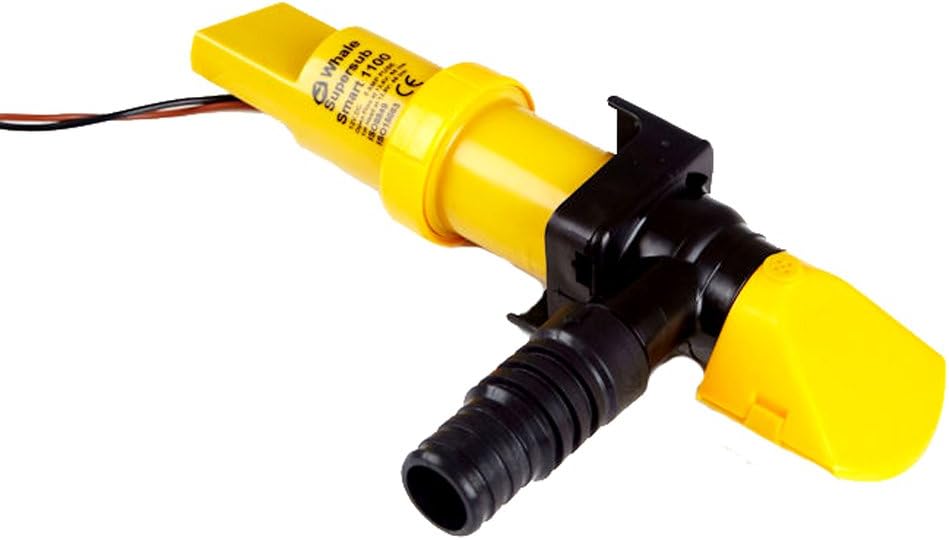
Keep the bilge dry with a pump built to switch on the moment water rises
The Whale 12V bilge pump is built around a 1100 GPH bilge rating, aimed at campervan, caravan and motorhome owners who want reliable clearing water from a bilge or wet floor without wiring in a mains supply.
£119.16inc. VAT
Fast, FREE United Kingdom delivery on all orders £75 or more. Orders under £75 pay a flat £8.99 delivery.
Whale’s 12V bilge pump built for clearing water from a bilge or wet floor. At £119.16, it sits in the higher end of 12V pumps for this use case.
Secure CheckoutCard details never touch our servers
Honest AdviceAsk us anything before you buy
Free ShippingMinimum spend required
Easy ReturnsHassle free returns & refunds
1100 GPH Bilge RatingClears standing water fast enough to keep ahead of a slow leak or wash-down runoff.
Self-PrimingDraws water up from the tank on its own at start-up, without needing the line pre-filled by hand.
There's a real gap between a pump that just about works and one you forget is even there, and a pump that quietly does its job without you thinking about it is worth paying attention to before you buy. The Whale unit is a 12V bilge pump aimed squarely at clearing water from a bilge or wet floor, and its spec sheet is built around a 1100 GPH bilge rating.
A bilge pump only earns its keep in the moment you actually need it, which is exactly why the automatic switch-on matters more than any other spec here: it activates as water rises past the sensor rather than waiting for you to notice a wet floor.
Rated at 1100 GPH, it clears standing water fast enough to keep ahead of a slow leak, condensation runoff, or wash-down water in a boat or van base, rather than just keeping pace with it. The low-profile housing is worth noting for tight installations — it sits flatter than a standard cartridge pump, which matters where floor clearance under a bunk or locker is limited.
At £119.16, it's a specialist fitting rather than a general accessory, and it earns its price back the one time it prevents standing water sitting against a floor or subframe for longer than it should.
Free United Kingdom delivery · easy returns · secure checkout
Got questions?
Frequently Asked Questions
How does an automatic bilge pump know when to switch on?
An automatic bilge pump has a built-in electronic or float-type sensor that detects rising water inside its housing. Once the level reaches the trigger point, the pump switches itself on without any input from you, and switches off again once the water has cleared — that's what makes it "automatic" rather than a plain manual pump you have to operate yourself.
Does it switch on automatically?
Yes — it's an automatic pump that activates as water rises past its internal sensor, rather than needing a separate float switch wired in.
Do I still need a separate float switch?
No — the automatic sensing is built into the pump itself, so you don't need to wire in a separate float switch for basic operation. Some installations add one anyway as a backup or high-water alarm, but it isn't required for the pump to work.
How many amps does a 12V bilge pump draw?
Bilge pump current draw varies by GPH rating — check the manufacturer's spec plate for this model and fuse the circuit above the stated figure, wiring it as directly to the battery as possible.
How much water can it move per hour?
It's rated at 1100 GPH, which is enough to keep ahead of a slow leak, condensation runoff or wash-down water rather than just keeping pace with it.
Can it be left permanently wired and submerged?
Yes — automatic bilge pumps like this one are designed to sit in place permanently, wired live to the battery so they can respond the moment water starts to rise, rather than being connected only when needed.
Will it fit in a shallow space?
It uses a low-profile housing, so it sits flatter than a standard cartridge-style bilge pump, which helps where clearance under a bunk, locker or floor panel is limited.
Can it run dry without damage?
Automatic bilge pumps of this type are generally built to tolerate brief dry running once the water level drops below the sensor, but check the manufacturer's guidance for continuous dry-run limits.
How do I test that it's working?
Pour a small amount of water into the housing until it reaches the sensor's trigger level and confirm the pump switches on and clears it, then switches off again once dry. Testing periodically, especially before a trip, is the only way to know it will actually work the one time you need it.
How is it wired?
It runs from a 12V supply through an inline fuse, typically wired directly to the leisure or start battery so it can operate even when other systems are switched off.
Do you deliver, and what does it cost?
Yes, we deliver across the UK, with your exact delivery charge shown at checkout based on your address.
Can I return it if it doesn't suit my setup?
Yes, in line with our returns policy — please keep the original packaging for a safe return.
Is there a warranty?
A specific warranty length isn't confirmed in our product record, so we won't state a figure we can't stand behind. Your statutory rights apply regardless.
The complete guide
Wiring a 12V pump safely into a leisure battery circuit — Whale
4 min readCamperFlow
A 12V pump should always run through its own inline fuse sized to the manufacturer's current draw, wired as close to the leisure battery as practical to minimise voltage drop over a long cable run. Undersized cable is the most common cause of a pump that seems underpowered despite being correctly rated — a pump starved of voltage delivers less pressure than its spec sheet promises, regardless of how good the pump itself is.
The Whale bilge pump (ASIN B01DUZ0UUQ) is priced at £119.16. Built for clearing water from a bilge or wet floor in campervans, caravans and motorhomes.